Mid-Year Market Read: H1 2026 and Bengaluru’s East
What the first half of 2026 tells us about where East Bengaluru’s housing market is heading, and how to read it as a buyer.
Every six months I try to step back from our own projects and read the wider market as honestly as I can, because the numbers tend to cut through the noise. Halfway through 2026, the Bengaluru story is unusually clear, and it is pointing east.
A word on the data first. The most complete numbers available right now are for the first quarter of 2026, drawn from PropTiger, Cushman & Wakefield, Knight Frank and ANAROCK. Second-quarter reports are still being compiled, so treat this as a read on the trajectory rather than a final H1 scorecard. The direction, though, has been remarkably consistent.
The Headline Number
Bengaluru was the country’s standout performer in early 2026. Average residential prices rose 24% year-on-year to roughly ₹9,785 per square foot in Q1 2026, according to PropTiger’s Real INSIGHT report, the sharpest appreciation of any major Indian city and an acceleration from 14% a year earlier. Just as telling, sales rose by about a third year-on-year while new supply actually fell, a combination that usually points to genuine end-user demand rather than speculation. Knight Frank separately ranked Bengaluru fourth among 46 global cities for prime residential price growth.
The East Is Where the Market Is Building
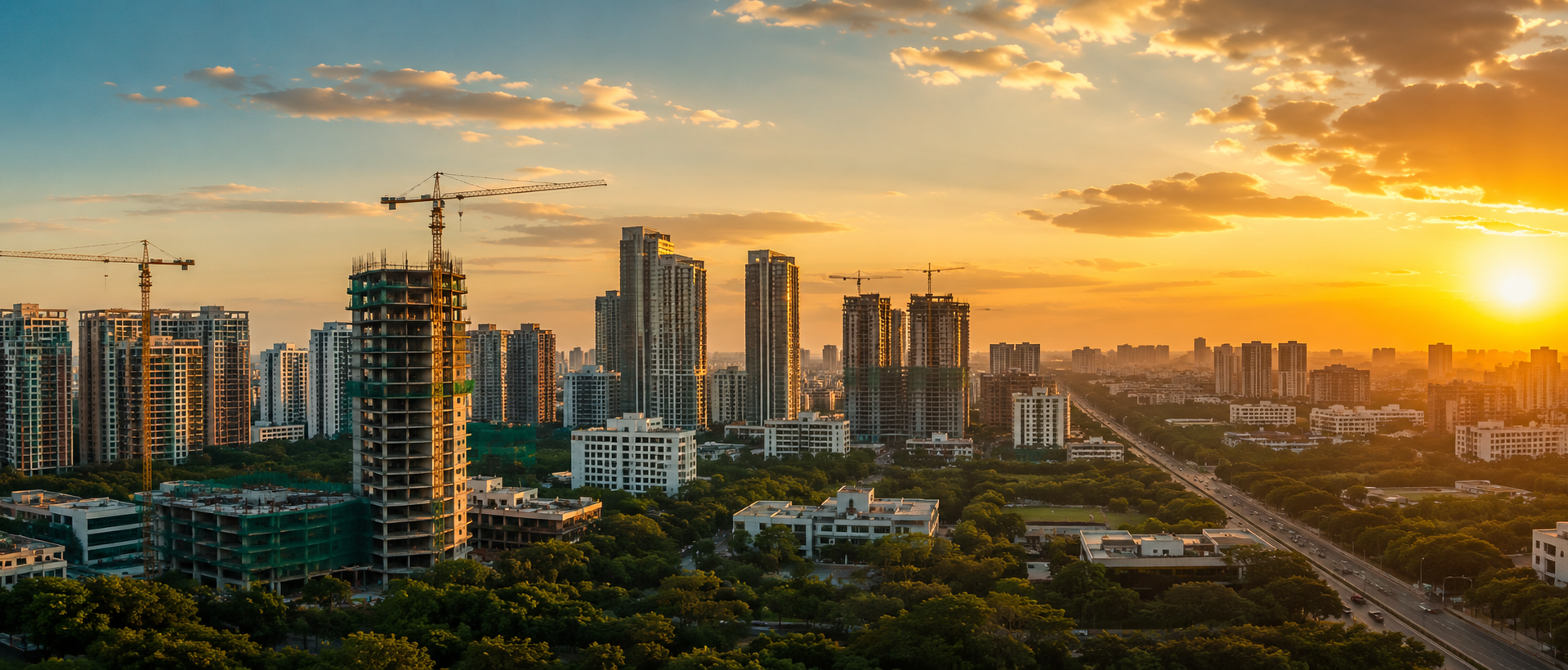
Here is the figure that matters most for this piece. East Bengaluru accounted for roughly 57% of all new residential launches in the city in Q1 2026, per Cushman & Wakefield’s MarketBeat, led by Whitefield, Gunjur, Budigere Cross and Hoskote, with North Bengaluru around Devanahalli taking most of the rest. Put plainly, more than half of everything being built in one of India’s hottest housing markets is going up in the east. Supply follows demand, and developers are voting with their land banks.
Reading the Corridors
The east is not one market, so it helps to read it corridor by corridor.
Whitefield remains the anchor, now with an operational Purple Line metro, mature social infrastructure, and steady rather than speculative growth. Apartment prices broadly sit in the ₹7,500 to ₹11,000 per square foot range, with rental yields among the healthiest in the city.
Sarjapur Road is the corridor most people now call the next big thing, and the data supports the talk. ANAROCK puts its three-year appreciation near 79%, with prices today spanning roughly ₹7,200 to ₹12,000 per square foot depending on the pocket and the developer. Its advantage is geographic, sitting within reach of the ORR tech belt, Whitefield and Electronic City all at once.
Budigere Cross has been the quiet surprise. Backed by improving airport connectivity and a wave of township development, it posted one of the sharpest one-year gains in the east, around 23%, earning it the inevitable “New Whitefield” label.
What’s Actually Driving It
Two engines, really. The first is employment. Bengaluru’s global capability centres and startup ecosystem have proven more durable than the older IT hiring cycles, giving the city a demand base that does not switch off when one sector slows. The second is infrastructure. The Purple Line is running, the Peripheral Ring Road and the Budigere Cross to airport road are reshaping access, and the Satellite Town Ring Road is steadily knitting the eastern towns together. JLL has found that homes within about two kilometres of a working metro corridor tend to outperform less-connected stock on appreciation, which is exactly why metro-adjacent pockets are commanding the most attention.
What This Means If You’re Buying in H2
A few honest observations rather than advice. Separate operational infrastructure from promised infrastructure, because a metro station running today changes your commute now, while a proposed one is a softer promise. Verify any project on the Karnataka RERA portal before you part with money, as it shows the real timeline, the approvals, and any complaints on record. Budget another eight to ten percent over the sticker price for registration, taxes and interiors. And visit at peak hours, because a corridor that feels calm at noon can be a very different place at nine in the morning. In a market this active, the developer you choose matters as much as the postcode.
Where Ruchira Sits in This Map
I will be transparent that we build in exactly the corridors this read is about. Ruchira Park East sits in Kannamangala, Whitefield East, carrying IGBC Gold pre-certification, and Ruchira Villa Feliz offers standalone villas off Sarjapur Road. We did not choose those locations because they were trending. We chose them because the fundamentals, employment density, infrastructure already on the ground, and room still left to grow, were in place first. The trend simply confirmed what the map was already telling us.
If the east is on your radar this year, the most useful thing you can do is visit, ask the hard questions, and read the corridor before the corridor reads you.
Rooted in you.
Ram Goniguntla, Founder, Ruchira Projects
Frequently Asked Questions
Why is East Bengaluru leading the real estate market in 2026?
East Bengaluru accounted for around 57% of the city’s new residential launches in Q1 2026, driven by a durable employment base of global capability centres and startups, plus heavy infrastructure investment across Whitefield, Sarjapur Road and the Budigere Cross corridor.
How much did Bengaluru property prices rise in 2026?
According to PropTiger’s Real INSIGHT report, Bengaluru’s average residential price rose about 24% year-on-year to roughly ₹9,785 per square foot in Q1 2026, the strongest appreciation among major Indian cities.
Which East Bengaluru corridor is appreciating fastest?
Sarjapur Road has appreciated close to 79% over three years per ANAROCK, while Budigere Cross posted one of the sharpest single-year gains in the east at around 23%, helped by airport connectivity and new township development.
Is it a good time to buy in East Bengaluru?
Demand stayed strong while supply tightened through early 2026, which supported prices. Whether it suits you depends on your budget, timeline and the specific project, so always verify it on the Karnataka RERA portal and distinguish infrastructure that is operational today from what is still planned.
What infrastructure is driving East Bengaluru growth?
The operational Purple Line metro, the Peripheral Ring Road, the Budigere Cross to airport road, and the Satellite Town Ring Road are the main catalysts, improving connectivity across Whitefield, Hoskote and the airport-side corridors.
Data sources: PropTiger Real INSIGHT – Residential Q1 2026; Cushman & Wakefield MarketBeat Bengaluru Q1 2026; Knight Frank; ANAROCK; JLL. Figures are Q1 2026 (latest complete data as of June 2026)